· Kauê Benk · Events · 7 min read
SouJava February 2026: Leadership, Careers and Green Software
Recap of the SouJava meetup held on Feb 11, 2026 at Oracle's São Paulo office — three talks covering the leap from Dev to Tech Manager, how to get found as a junior developer, and writing sustainable Java code.
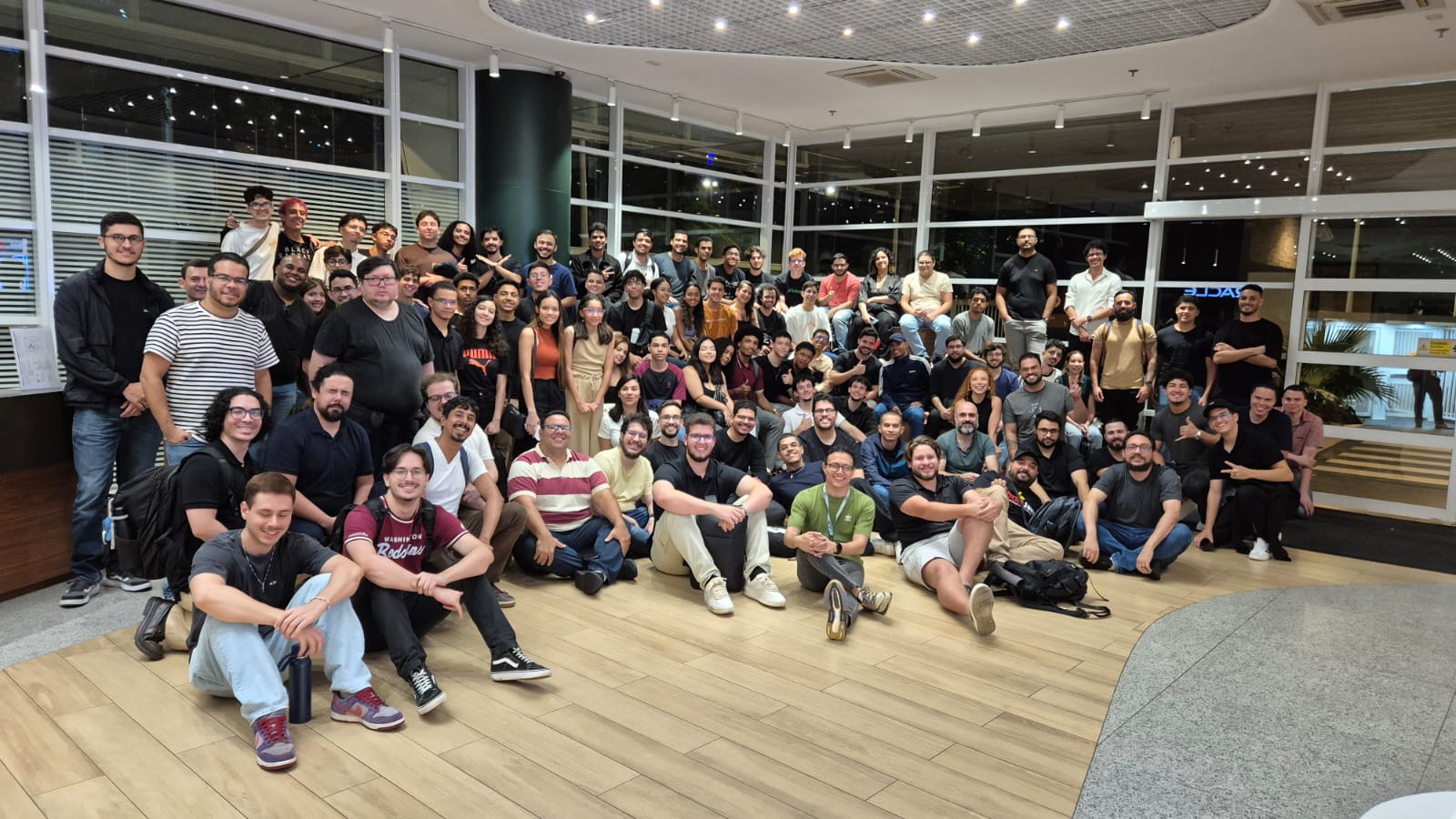
Last Wednesday I attended the February edition of the SouJava meetup, hosted at Oracle’s office in São Paulo. Three talks, pizza, and the kind of candid conversation you only get when the Java community gathers in person. Here’s what I took away.
The lineup
| Time | Speaker | Talk |
|---|---|---|
| 19h00 | Alaydes Morais | De Dev Java a Tech Manager |
| 19h45 | Guilherme Silva | Currículo, LinkedIn e Java: Como Ser Encontrado no Início da Carreira |
| 20h15 | Leandro Marques | Green Software: Desempenho em Aplicações Java para o Futuro Sustentável |
Talk 1 — From Dev Java to Tech Manager (Alaydes Morais)
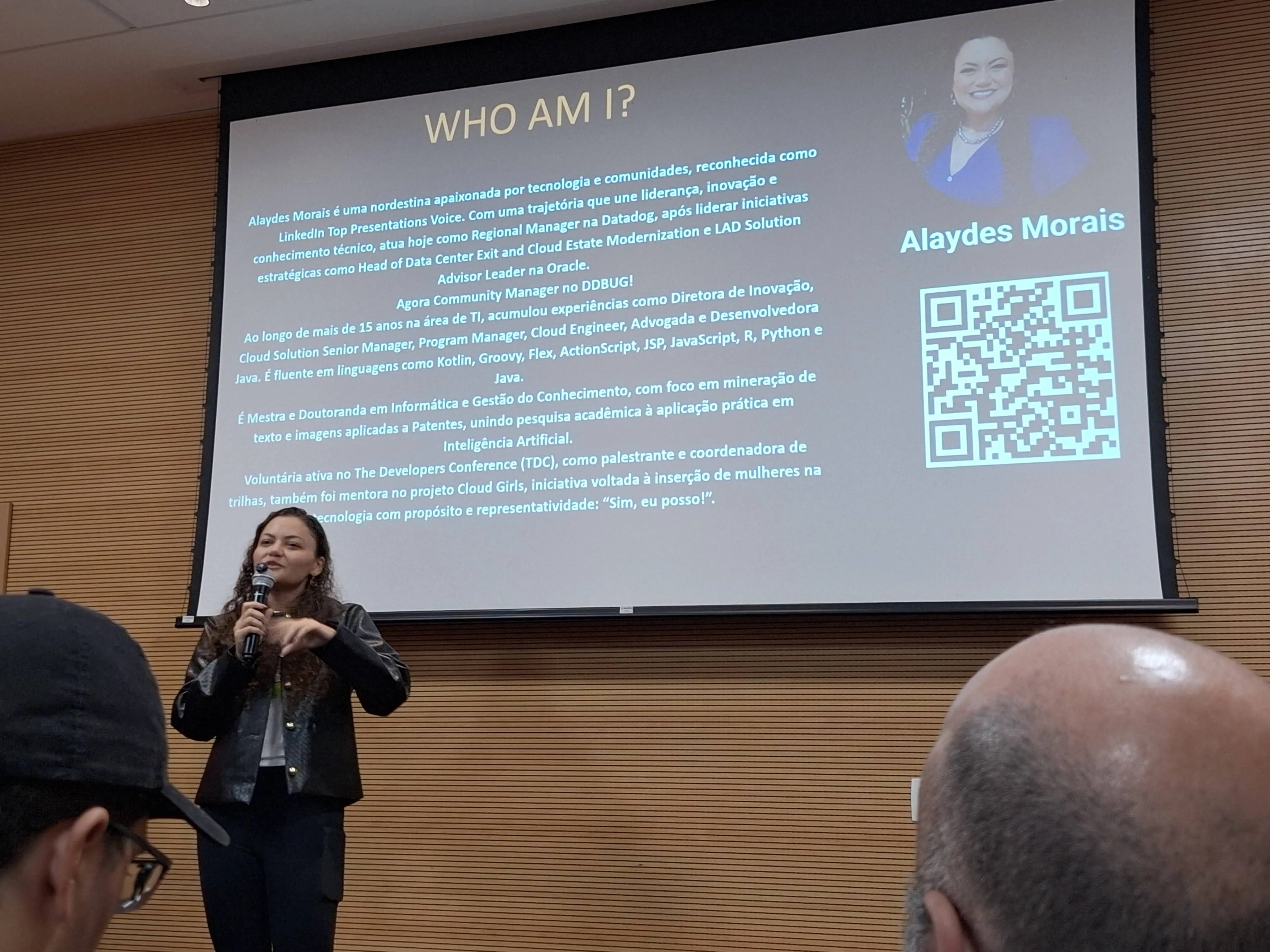
Alaydes is a Regional Manager at Datadog, former Oracle director, and has been in tech for nearly 18 years — about nine of those in management. She started coding Java at 14 in Teresina, Piauí, and opened the talk by saying that the IC (Individual Contributor) path and the management path are both valid — and that ICs at the Staff/Principal level can earn as much as directors.
Key takeaways
- Have a “sonho grande” (big dream). When she asked the room who has a clear purpose driving their career, less than half raised their hands. Without a direction, you let other people steer your trajectory for you.
- Find someone to admire. Study what they did — certifications, communities, decisions — and use that as a reference, not a template.
- “Espíritos de luz” vs. “almas cebosas”. She divides the people in every company into roughly 50–50: those who share knowledge and lift others up versus those who hoard information and pull the rug from under you. If you want to lead, you need to be the first kind — and train others to be, too.
- Leadership is a learnable set of skills, not a born trait. Empathy, feedback, emotional intelligence — all trainable. She herself wasn’t naturally empathetic and had to work hard to develop it.
- Stop coding, start enabling. The hardest part of the transition is letting go of the keyboard and accepting you should hire people better than yourself. The ego that says “I do it faster” has to die.
- The leader is the Garbage Collector. Your job is to identify and remove blockers in the daily standup — not just listen and nod. If you accumulate blockers and do nothing, you’re useless.
- Lead by example. If you say the team shouldn’t work past 6 PM, you don’t ask anyone to work past 6 PM. Period.
- Give credit. Never take credit for your team’s work. She highlighted that in seven years, she never lost a team member — some even followed her to new companies.
She closed with some visceral real stories about firing a mother of five who grabbed her feet begging, and about an ex-employee who vandalized the office after being let go. Her point: leadership demands serious emotional resilience. If your head isn’t prepared, don’t enter management just for the salary bump.
Practical advice for aspiring leaders: volunteer to coordinate projects or communities at work, do a SWOT analysis of leaders you admire, build a Personal Development Plan with dates and metrics, and invest in communication — theater classes, submitting talks to conferences, and (yes) therapy if needed.
Talk 2 — Résumé, LinkedIn and Java: How to Get Found Early in Your Career (Guilherme Silva)
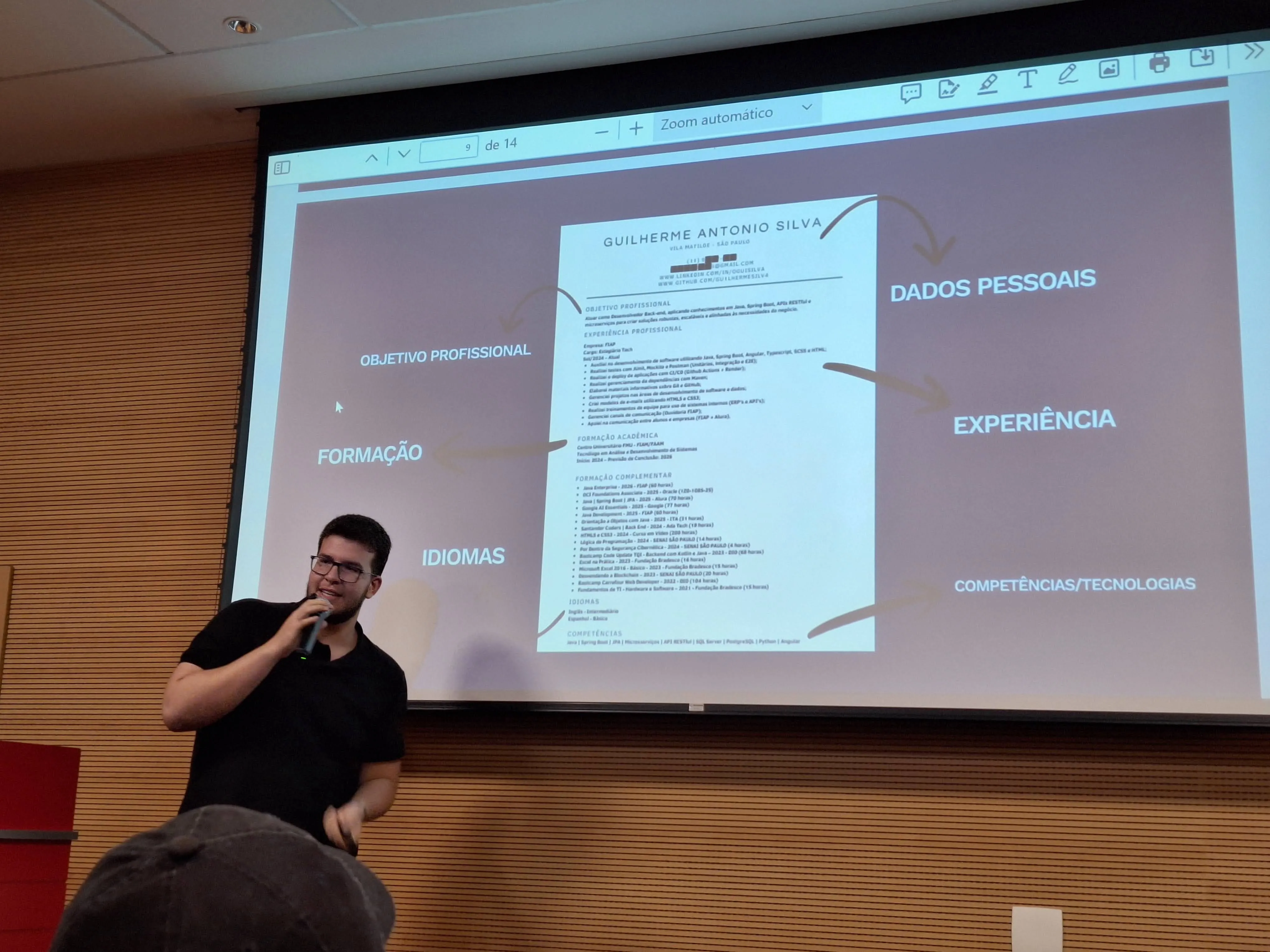
Guilherme works on the Talent team at the Alura/FIAP group, focused on student employability. This was his first-ever conference talk — a great example of community enabling growth.
Résumé tips
- ATS is real. Systems like GUPY and Solides rank résumés by keyword matching against the job description. Out of roughly 500 applications, only about 10 are well-structured.
- Keep it simple. Two-column layouts and photos break ATS parsing. Use a single-column format.
- GitHub counts as experience. If you don’t have formal employment, your projects and open-source contributions go in the Professional Experience section.
- Add a Competencies section at the bottom as a keyword safety net — ATS reads the entire document.
- Course hours matter. A 60-hour course looks far more substantial than a 2-hour one. Be strategic about what you list.
- Two pages are fine for mid/senior level; just make sure every line earns its spot.
- Use ChatGPT to tailor your résumé to specific job postings — match their language.
LinkedIn tips
- LinkedIn search works like ATS. Recruiters use Boolean filters (
"Java Developer" AND "Junior" AND "Spring Boot"), and the best-structured profiles surface first. - Optimize your headline. Use a present → future → skills formula. For example: “Currently intern → aspiring backend developer → Java, Spring, Hibernate, Microservices.”
- Connect strategically. Senior engineers, recruiters and community leaders — not just peers at the same level.
- Reach out to recruiters proactively. Many post opportunities on their personal feed, not the jobs board. A direct message creating a personal connection helps during screening.
He closed with Reid Hoffman’s quote: “The opportunity doesn’t appear — you create it.”
Talk 3 — Green Software: Performance in Java Applications for a Sustainable Future (Leandro Marques)
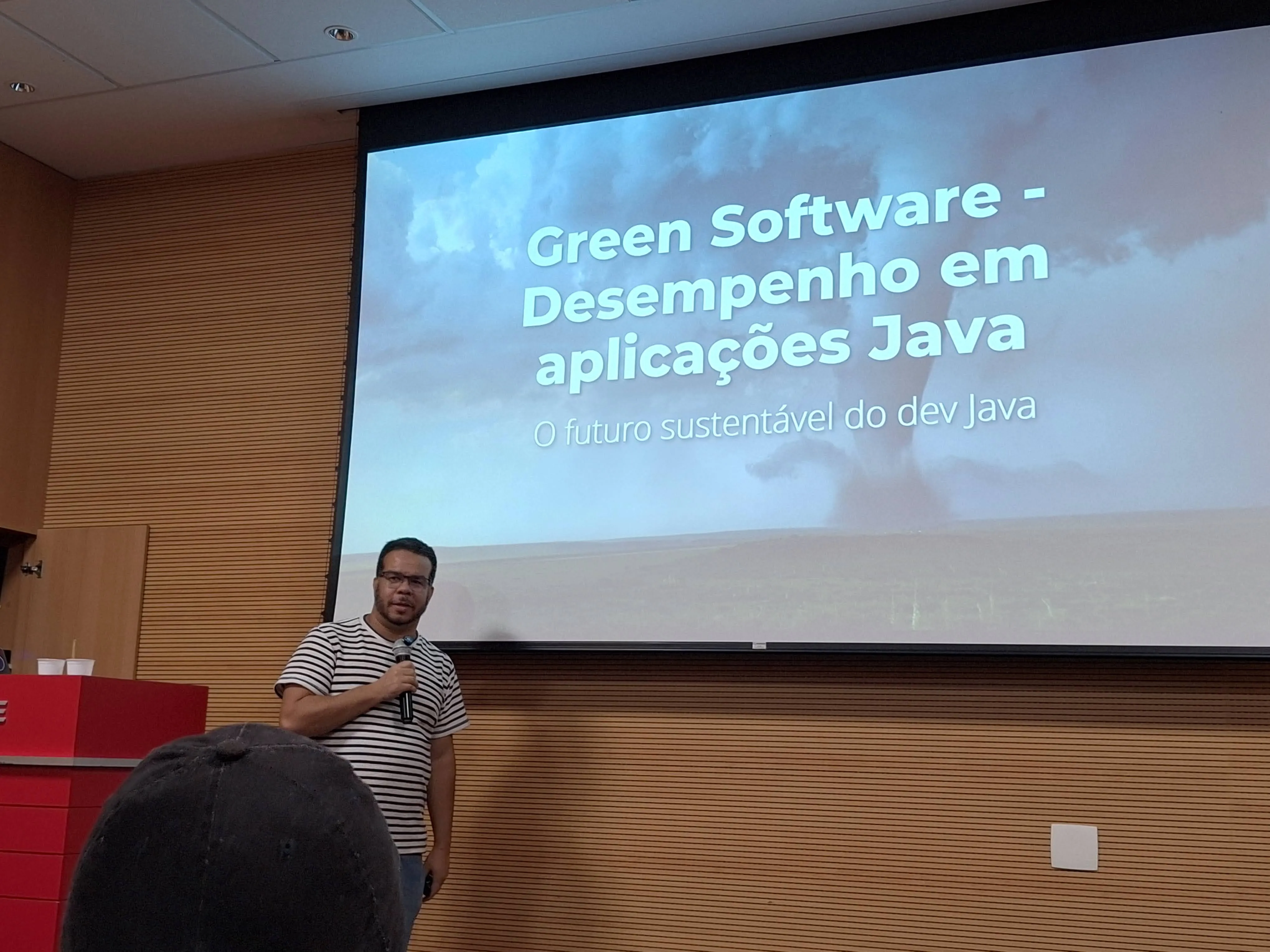
Leandro is a Senior Staff Software Engineer at Banco Santander. His was the most technical talk of the night and the one that made everyone sit up a little straighter.
The business case
- Green Software = efficient software. If your code is efficient, you’re automatically compliant with ESG sustainability goals, you save the company money on infrastructure, and you look great doing it.
- ESG (Environmental, Social, Governance) is managed at the executive level in large enterprises. Green IT is its subset — and sustainable software development is a piece of that puzzle every developer can own.
The technical deep dive
He walked through a real production scenario:
- A microservice returning users by ID used a
LinkedListwith 500 users → 291 TPS on a single pod (1 core, 1 GB RAM). Acceptable. - The user base grew to 5,000, then 10,000 users → performance collapsed to 11 TPS per pod, requiring 25 pods to maintain throughput.
- Root cause:
LinkedList.find()is O(n). Combined with a loop, the API was running at O(n²). - Fix: Switch to
HashMap(O(1) lookup via hash function). Same 10,000 users → 407 TPS on a single pod with ~25% CPU usage.
One data-structure swap eliminated 24 pods. Multiply that by the cost per pod and you’re saving hundreds of thousands of reais per year.
Beyond data structures
- Bad SQL (
SELECT * FROM), misconfigured connection pools, and untuned endpoints all increase CPU, energy, and cost. - Framework tuning matters — you don’t have to abandon Spring or Quarkus. Fine-tuning connection pools and disabling unused features yields significant gains. For extreme low-latency contexts (e.g., B3 stock exchange), some teams drop JPA for raw JDBC.
- Trade-offs with security: adding validations vs. performance is a business decision, not a solo developer call.
Resources
- The Green IT association holds regular conferences (the next one in April in Rio de Janeiro).
- Java certification study forces you to understand the Collections framework deeply — which is exactly where these performance gains live.
Community highlights
- Oracle’s Felipe César promoted the OCI Free Tier (2 VMs, 4 CPUs, 24 GB RAM, 20 GB autonomous database — free forever) and the Oracle ACE program’s new 6-month free mentorship, launching at the upcoming Oracle for Communities event at WTC Morumbi.
- SouJava is now present in 5 cities, active on Discord with Java Champions like Bruno Souza and Otávio Santana, and contributing to Jakarta EE specs (Jakarta Data and Jakarta NoSQL).
- Next meetup: March 18, 2026.
Watch the meetup
Watch the event recording on YouTube
Final thoughts
Three very different talks, all circling the same idea: the value of a Java developer goes far beyond writing code that compiles. Whether you’re refactoring a LinkedList into a HashMap, stepping up to lead a team, or simply formatting your LinkedIn to be found — the difference is intentionality.
If you’re in São Paulo and haven’t joined a SouJava meetup yet, the next one is in March. Show up. The pizza alone is worth it.